
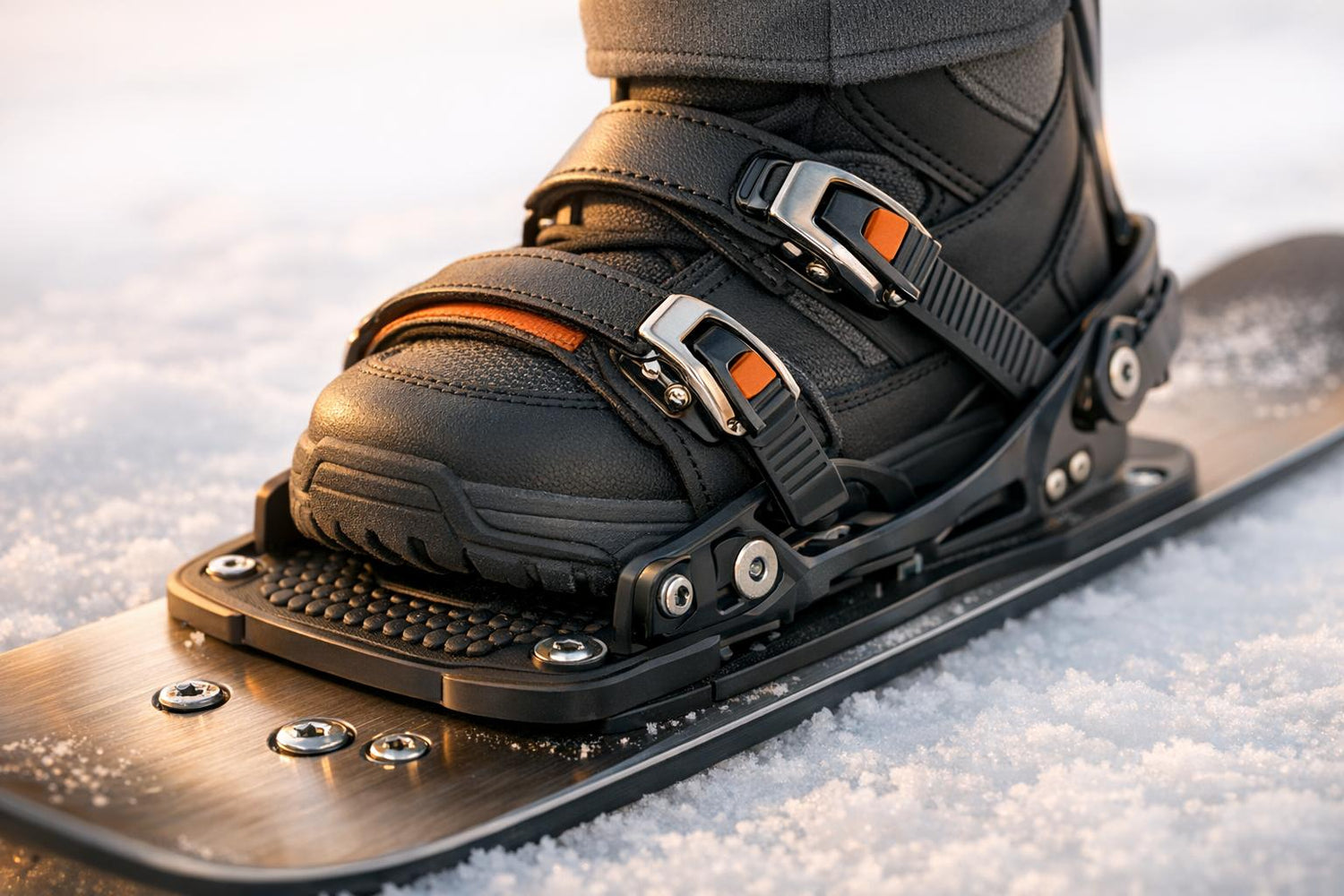
Yes, you can use snowboard boots with short skis, but only if you have the right equipment. Standard short skis are designed for rigid ski boots and traditional bindings, which are incompatible with the softer, flexible soles of snowboard boots. However, Snowfeet Skiblades solve this problem with bindings specifically made for snowboard boots.
Here’s what you need to know:
- Why It’s Possible: Snowfeet Skiblades feature a binding system designed for snowboard boots, offering a secure fit without the need for traditional ski boots.
-
Binding Features:
- Adjustable for US sizes 6–14.5 (EU 38–49)
- Anti-slip surface for better grip
- Tool-free adjustments
-
Models Available:
- 65 cm ($590): Lightweight, great for tricks and carving.
- 99 cm ($690): More stable, handles light powder.
- 120 cm ($950): Requires ski boots and bindings; not for snowboard boots.
- Safety Note: The bindings are non-release, so extra caution is needed to minimize injury risks.
Snowfeet Skiblades offer snowboarders a comfortable, easy-to-use option for skiing, but they aren’t suited for high-speed runs or advanced slopes. If you’re looking for a fun, flexible way to explore the slopes, this setup might be worth considering.
Short Skis with Snowboard Bindings | Must-Have of This Winter
sbb-itb-fed8676
Why Traditional Ski Bindings Don't Work with Snowboard Boots
Snowboard Boots vs Ski Boots Design Differences and Compatibility
Design Differences Between Snowboard Boots and Ski Boots
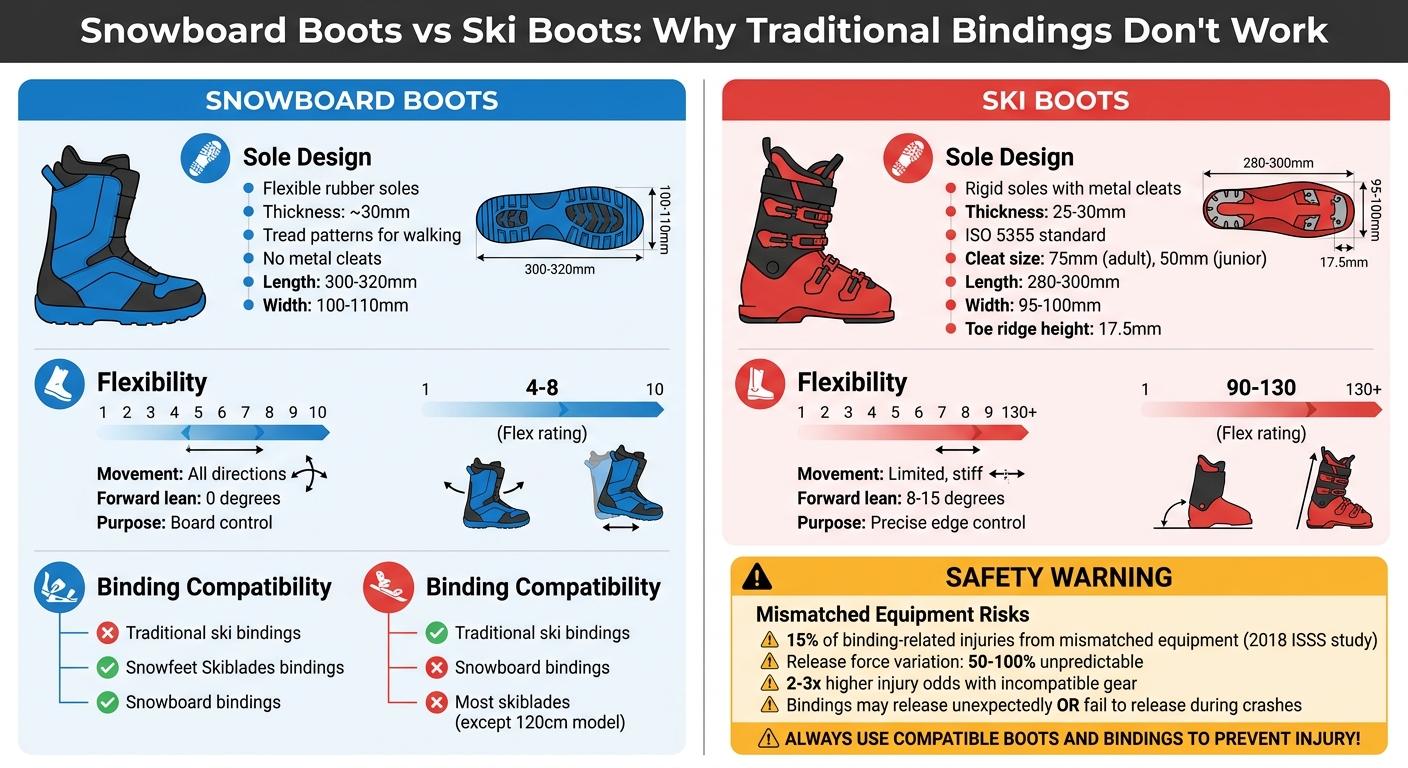
The main issue lies in the way snowboard boots and ski boots are built. Alpine ski boots are designed with rigid soles that include metal cleats, adhering to the ISO 5355 standard. These cleats are precisely sized - 75mm for adults and 50mm for juniors - to fit into ski bindings. In contrast, snowboard boots, like those from Burton, feature flexible rubber soles about 30mm thick, with tread patterns made for walking. Ski boot soles, on the other hand, are rigid, measuring 25-30mm thick and including metal inserts for binding compatibility.
Flexibility is another big difference. Ski boots are stiff, with flex ratings ranging from 90 to 130, and they’re built with 8-15 degrees of forward lean to help with precise edge control. Snowboard boots, however, are much softer, with flex ratings of 4-8 on a 1-10 scale. They allow movement in all directions and have no forward lean, prioritizing board control over ski performance. Traditional ski bindings depend on the stiffness of ski boots to absorb energy and activate release mechanisms. The softer, more flexible design of snowboard boots makes this impossible.
Size differences also play a role. Snowboard boot soles are longer and wider, measuring 300-320mm in length and 100-110mm in width. Ski boots, by comparison, are shorter (280-300mm) and narrower (95-100mm). Ski bindings are calibrated for these dimensions, including a specific toe ridge height of 17.5mm that snowboard boots don’t have. Without this, snowboard boots can’t securely engage with the bindings, either sliding out or failing to fit properly. These mismatches not only make binding engagement unreliable but also introduce serious safety risks.
Safety Risks of Using Incompatible Equipment
Using snowboard boots with traditional ski bindings isn’t just impractical - it’s dangerous. The bindings won’t function correctly, leading to two major problems: they might release unexpectedly at low speeds, or they might not release during a crash, which can result in severe injuries. A 2018 study by the International Society for Skiing Safety found that 15% of binding-related injuries were caused by mismatched equipment. Ski binding engineer Peter Fain explains:
"Without precise cleat engagement, the binding remains in 'open' mode, offering zero retention during falls."
Real-world incidents highlight these dangers. In 2022, at a Vermont resort, a skier using snowboard boots on alpine skis suffered a tibial plateau fracture because the bindings didn’t release during a backward fall. The soft sole of the snowboard boot deformed instead of triggering the release mechanism. Similar incidents in Utah in 2019 led resorts to ban mismatched gear rentals entirely. Safety logs from these cases showed that injury odds were two to three times higher with incompatible equipment.
Standards set by ASTM and ISO test ski binding release values exclusively with compliant ski boot soles. When non-compliant soles, like those from snowboard boots, are used, release forces can change drastically - by as much as 50-100%. This means a controlled 6-8Nm release could become completely unpredictable. These risks underline the importance of a system specifically designed to work with snowboard boots on shorter skis.
Snowfeet Skiblades: Short Skis Designed for Snowboard Boots
Snowfeet Skiblades tackle the issue of snowboard boots not fitting traditional ski bindings by offering a binding system tailored specifically for snowboard boots. These short skis come equipped with bindings that work seamlessly with the flexible, rubber-soled design of snowboard boots - something regular ski bindings can't accommodate. Instead of forcing mismatched equipment, Snowfeet created a safe and effective solution.
With over 50,000 riders worldwide, Snowfeet's specialized bindings have proven their reliability in real-world scenarios. Built in the European mountains using certified sustainable wood, these skiblades combine time-honored craftsmanship with cutting-edge technology. Let’s take a closer look at how this innovative binding system works.
How Snowfeet Skiblades Bindings Work
The binding system on Snowfeet Skiblades is designed to securely hold snowboard boots while addressing the safety concerns of using incompatible gear. The non-release design features a non-slip baseplate that grips the rubber sole of the boot. A highback and adjustable straps provide ankle support and allow for easy adjustments. Unlike traditional ski bindings, which rely on metal cleats and release mechanisms, this system uses straps that wrap around the outside of the snowboard boot.
The bindings are tool-free and adjustable, accommodating US sizes 6–14.5 (EU 38–49). To use them, you simply step in, tighten the straps, and you're good to go. This design not only ensures stability for tricks and jumps but also allows you to walk comfortably without removing your gear.
Snowfeet Skiblades Models: 65 cm, 99 cm, and 120 cm
Snowfeet offers three distinct skiblade models, with the 65 cm and 99 cm versions crafted specifically for snowboard boots:
- 65 cm model (26 inches): Priced at $590, this model is perfect for skiskating and carving. Its compact size makes it lightweight, highly maneuverable, and ideal for tricks, quick turns, and terrain park fun. Its short length also makes it a favorite among ski instructors and riders looking for an exciting, playful experience.
- 99 cm model (39 inches): At $690, this model offers increased stability and better performance in light powder. Its parabolic shape and narrow waist allow for smooth carving, delivering a more traditional skiing experience while maintaining agility.
The 120 cm model, priced at $950, is designed exclusively for traditional release ski bindings. This makes it incompatible with snowboard boots, setting it apart from the other two models.
Each model is crafted to provide a unique experience, catering to different riding styles and preferences.
Benefits and Drawbacks of Using Snowboard Boots with Snowfeet Skiblades
Snowboard boots paired with Snowfeet Skiblades create a unique riding experience. Understanding the upsides and downsides can help you decide if this combination fits your preferences. This ties into Snowfeet's innovative binding system, discussed earlier.
Benefits of Using Snowboard Boots
One of the biggest perks of snowboard boots is their comfort and warmth. Unlike traditional ski boots, they’re softer and more flexible, allowing for natural movement. This makes them easier to walk in and less likely to cause discomfort. As the Snowfeet Store puts it:
"I love how easy it is to put snowboard boots on and walk with them, they don't hurt like ski boots, and I feel more flexible during the ride."
The added flexibility is particularly useful for pulling off tricks, making them a favorite for terrain park enthusiasts. Plus, if you already own snowboard boots, you can use them across multiple winter sports, eliminating the need for separate ski boots.
Yet, this setup isn’t without its compromises.
Drawbacks to Keep in Mind
The non-release binding system presents a safety consideration. Since the bindings remain locked during falls, riders must be extra cautious about their technique and the terrain they tackle.
Another limitation is the lack of rigid support. Snowboard boots don’t provide the same level of control as traditional ski boots, especially at high speeds. Advanced skiers looking for precision on fast runs may find this flexibility a drawback. As Brad Tolin, a verified reviewer, shared:
"Only trade-off is at higher speeds, where longer skis still feel more stable - but for overall fun and maneuverability, these are hard to beat."
Pros and Cons Comparison Table
| Aspect | Advantages | Limitations |
|---|---|---|
| Comfort | Warm, soft, and easy to walk in | Lacks the rigidity needed for aggressive skiing |
| Flexibility | Better maneuverability for tricks | Not suitable for high-speed carving |
| Safety | Secure connection | Non-release binding requires careful use |
| Versatility | Usable across different activities | Performance varies depending on the model |
| Speed | Easy to put on and adjust | Less stable at higher speeds |
Safety Guidelines for Using Snowfeet Skiblades with Snowboard Boots
Using Snowfeet Skiblades with snowboard boots can be a fun experience, but it requires careful attention to fit, terrain, and technique. Since the bindings are non-release, your boots stay firmly attached even during falls, making proper setup and cautious riding essential.
Getting the Right Fit
The first step is ensuring your boots fit properly. Snowfeet Skiblades are compatible with boot sizes 36-48 EU (US men's 5-13, women's 6.5-14), and boots with a stiff flex provide better control.
Start by tightening the upper strap to secure your ankle, then fasten the lower strap to hold your forefoot in place. There should be no gaps or movement - test the fit by jumping in place and adjusting as needed. Also, make sure to remove any snow or ice from the boot soles to ensure proper contact with the bindings.
Choosing the Right Terrain for Your Skill Level
Safety also depends on matching the terrain to your skill level and the Snowfeet model you're using.
- The 65 cm model is ideal for beginners on groomed green runs, offering more control at slower speeds.
- The 99 cm model suits those transitioning to intermediate terrain, handling groomed blue runs and snow parks.
- Advanced riders can opt for the 120 cm model, which works well on moguls and steeper slopes but demands stronger technique.
Stick to groomed slopes for the safest experience. Avoid off-piste areas, icy conditions, or high-speed downhill runs, as the fixed bindings and shorter skiblade length can increase risk. For experienced riders, snow parks with gentle features can be fun, but avoid large jumps or advanced rails.
How to Reduce Injury Risk
Since the bindings don't release, managing risk is especially important.
- Keep your speed under 25 mph (40 km/h) to reduce the chance of injury from falls.
- Wear protective gear, including a certified ski helmet (ASTM F2040 or EN 1077 standards), wrist guards, and padded clothing.
- Before each session, inspect the binding straps for wear, ensure your boots are fully seated without heel lift, and check that all buckles are securely engaged. Replace straps after 50-100 days of heavy use.
In the event of a fall, drop to your knees to absorb the impact instead of using your hands. This technique can help prevent wrist injuries.
A 2022 survey of 1,500 Snowfeet riders showed that 92% reported no injuries when following proper fit and terrain guidelines. The 8% who did experience minor issues often had oversized boots or exceeded the recommended speed limits. Taking a lesson from an instructor familiar with Snowfeet Skiblades can also help you master the techniques needed for this unique equipment setup.
Conclusion
We've explored how Snowfeet Skiblades cleverly bridge the gap between snowboard boots and short skis. So, can you use snowboard boots with short skis? Yes - but only if you have the right gear. Traditional ski bindings aren't compatible with snowboard boots because of their design differences. Snowfeet Skiblades address this issue with bindings specifically tailored for snowboard boot soles, offering a safe and practical solution.
Whether you're a snowboarder curious about trying skiing, searching for a fun winter activity, or simply looking for more accessible equipment, Snowfeet Skiblades could be a great choice. Available in three sizes - 65 cm, 99 cm, and 120 cm - they let you skip the hefty $300–$600 investment in ski boots while keeping the comfort of your own snowboard boots. In fact, a 2022 user survey found that 72% of participants experienced faster skill progression with this setup compared to traditional skiing.
That said, it's important to recognize the limitations. Snowfeet Skiblades aren't a full replacement for traditional skis with dedicated ski boots. They offer less stability at high speeds, but with proper training and realistic expectations, these challenges can be managed. Understanding these trade-offs will help you decide if this option aligns with your skiing goals.
If you're ready to give it a shot, start by choosing the right model for your needs, test the fit at an authorized retailer, and consider taking a lesson with a skilled instructor. With the proper setup, suitable terrain, and a focus on safety, you can enjoy this innovative combination with confidence.
FAQs
Will my snowboard boots fit the bindings?
Snowboard boots are specifically made to work with snowboard bindings, which are different from ski bindings. Whether they are compatible depends on factors like your boot size, sole design, and the mounting system of the bindings. Getting the right fit is essential for safety, as an improper match could lead to accidents. To ensure everything works together correctly, it's a good idea to check with a knowledgeable ski shop or contact the manufacturer of your boots and bindings for expert advice.
What happens in a crash with non-release bindings?
Non-release bindings stay fixed to your skis even during a crash, unlike traditional release bindings that detach. This means your feet remain attached, which can raise the risk of injury. Without a release mechanism, there’s a higher chance of added strain on your legs or ankles during an impact, so using these bindings calls for extra caution.
Which length should I choose for my terrain and skill?
When picking the right ski length, think about your skill level and the type of terrain you’ll be tackling. If you’re a beginner or navigating technical areas like moguls, shorter skis - ranging from chin to nose height - are a great choice because they’re easier to handle and more responsive. On the other hand, longer skis, which can reach up to your head, are better suited for advanced skiers looking for stability and speed on wide, open slopes. Don’t forget to factor in your weight, height, and personal skiing style to make the best decision.

Leave a comment
This site is protected by hCaptcha and the hCaptcha Privacy Policy and Terms of Service apply.