
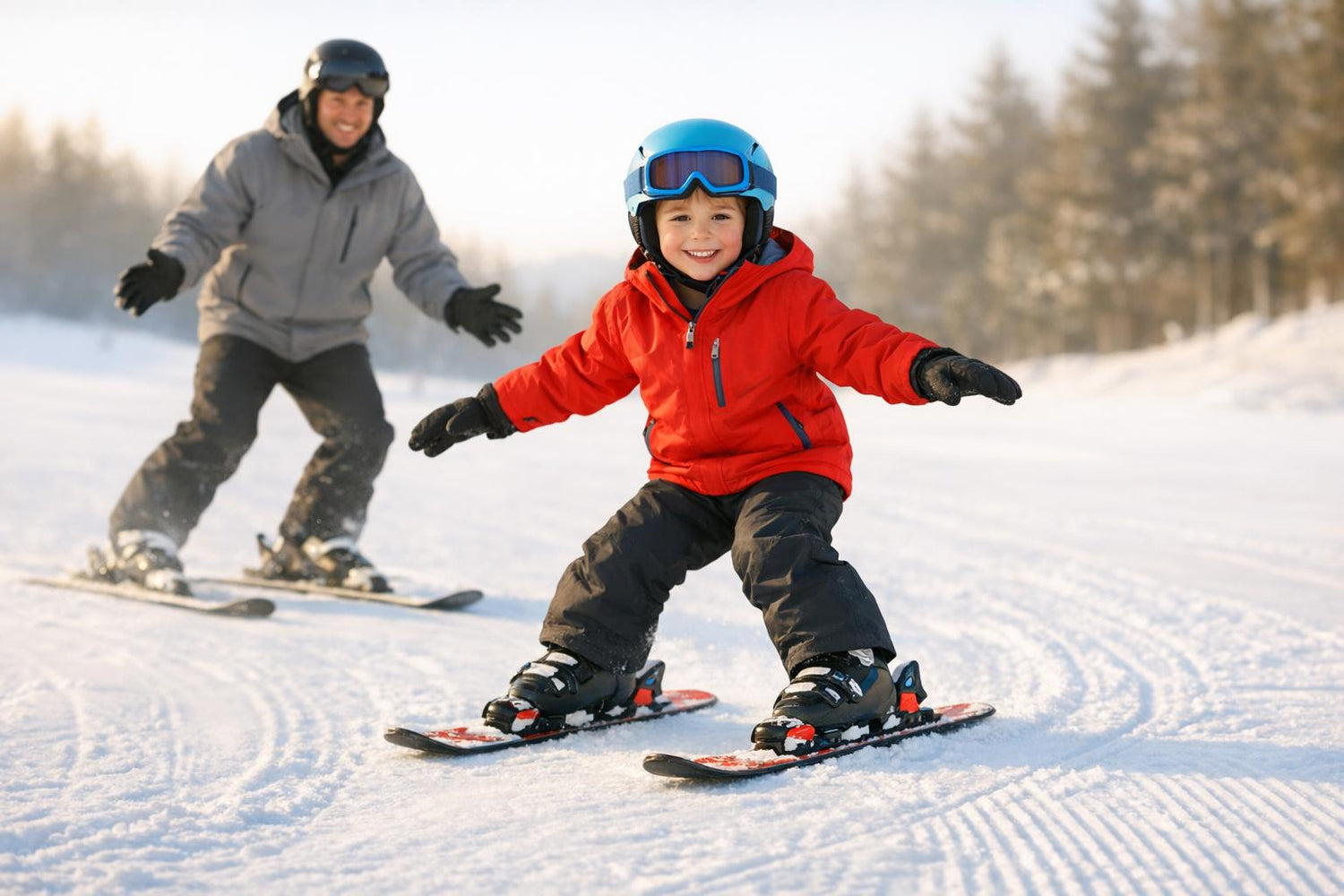
Short skis make skiing easier for kids to learn, safer, and more enjoyable. They’re lighter, simpler to control, and help children build confidence faster. Unlike longer skis, they reduce fatigue, improve balance, and make turning much easier. Here's why they’re a great choice for beginners:
- Better balance and control: Short skis are easier to manage, helping kids stay steady and aligned.
- Simpler turning: They allow smoother, quicker turns with less effort.
- Reduced fatigue: Lightweight designs mean less strain on young skiers.
- Safer falls and recovery: Kids can get back up faster without tangling their skis.
- Improved performance in varied snow conditions: Short skis handle icy or slushy terrain with ease.
- Faster learning: Children master skills like stopping and turning more quickly.
- Easy to carry and transport: Their compact size makes them simple to handle and store.
For kids just starting out, chin-height skis are ideal. These provide the right mix of control and stability, ensuring a smoother learning curve and a fun experience on the slopes.
Skiing Since Age 1 | Mountain Girl Journey
sbb-itb-fed8676
1. Better Balance and Body Control
For new skiers, navigating shifting terrain and varying speeds can feel overwhelming. Shorter skis ease the physical strain on their developing sense of balance, making the experience more manageable.
This is where short skis shine. Skiing demands constant balance adjustments, which rely heavily on proprioception - the body's ability to sense and respond to movements. Physiotherapist Joanne Pollard explains:
Proprioception – or your bodies ability to tell your brain what is going on in the muscles and joints... is of huge value in skiing and snowboarding, as continual feedback from your joints and muscles is important.
Short skis also make rotational separation - keeping the upper body steady while the lower body pivots - much easier. This reduction in leverage helps skiers perform smooth turns without overexertion. Additionally, shorter skis encourage proper alignment, ensuring knees stay aligned with toes and preventing hips from sagging as fatigue sets in. Pollard emphasizes:
Improving your balance is going to help you improve your body awareness, control and performance – and may just help you save that fall!.
2. Simpler Turning and Maneuverability
For kids just starting out, turning on skis can feel like the biggest hurdle. Traditional skis often require a level of precision and strength that beginners simply don’t have yet. That’s where short skis come in - they make the process so much easier.
With a shorter edge, there’s less pivot resistance, which means turns are smoother and quicker. As The Ski Monster explains, "Shorter skis are always quicker and easier to initiate a turn on for a given ski". This design lets kids shift from edge to edge faster, giving them a more responsive experience. That responsiveness helps build confidence, turn by turn, while also tying in nicely with the balance advantages mentioned earlier.
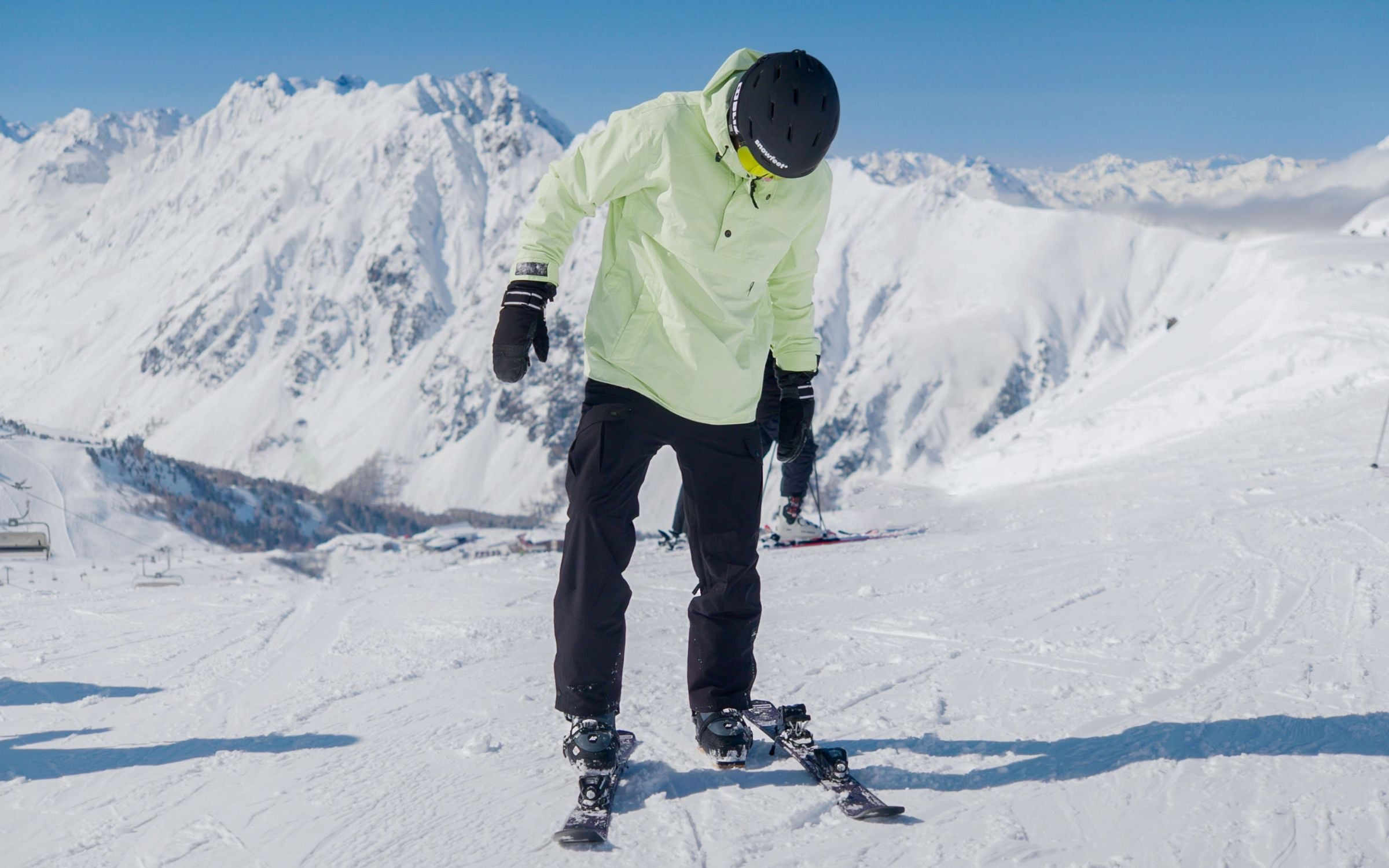
Short skis also shine on crowded slopes and tight trails. Brad Tolin, who tested Snowfeet Skiblades, shared that they’re "easy to control, quick to turn, and forgiving when technique falters". That forgiving quality becomes a lifesaver when kids start to tire, as their form tends to slip toward the end of the day.
Weight plays a big role here, too. Many short skis are made with ultralight materials like carbon fiber, which reduces the effort needed for each turn. MindySue, after trying the 99 cm skiblades, said: "I had a lot of fun with the 99s. They are easier to turn than skis. The kids tried them as well and boasted about them". When the gear feels light and manageable, kids can focus on enjoying themselves rather than struggling with heavy equipment.
For parents looking to buy, chin-height skis are a great starting point for beginners. This length strikes the perfect balance - easy to maneuver while still offering enough stability. Snowfeet offers options ranging from 65 cm ($550.00) to 120 cm ($950.00), all with glowing 5.0 out of 5 ratings from users who frequently highlight their ease of use and maneuverability.
3. Less Physical Fatigue and Effort
Short skis aren't just easier to turn - they also help reduce physical strain for young skiers. Kids often tire out quickly on the slopes, and heavy or cumbersome equipment only adds to the challenge. Short skis, especially those crafted from ultralight materials like carbon fiber, are much easier to handle. Unlike traditional longer skis, which require more energy with every turn, short skis demand less effort to control. This means kids can conserve their energy while maintaining balance and direction.
The reduced length of short skis also means less rotational force is needed, putting less strain on young hips and knees. This helps delay muscle fatigue, which is a common issue that can lead to a "backseat" stance - a problem that longer skis tend to worsen. Short skis, on the other hand, remain stable and easy to steer even as kids get tired.
Brad Tolin, after testing Snowfeet Skiblades, shared his experience:
These ski blades are a blast to use. Super easy to control, quick to turn, and way more forgiving than traditional skis... they're lightweight and much easier to carry around than full-size skis.
This reduced effort allows kids to stay on the slopes longer, giving them more time to practice and improve their skills.
4. Better Safety and Fall Recovery
Falling is a natural part of learning to ski, but short skis make the recovery process much easier for kids. Their lighter weight allows children to lift their legs and reposition themselves without the struggle of managing heavy equipment. In contrast, long skis can trap beginners, eating into valuable practice time. This ease of getting back up is a key safety benefit for young learners.
Short skis also help minimize the dreaded "crossed ski syndrome", where skis tangle during a fall. With lengths ranging from 17 to 39 inches (44 to 99 cm), there’s simply less material to get caught up in. This design means fewer frustrating entanglements and quicker recoveries, which is especially helpful for beginners.
Another advantage lies in how short skis encourage balance and body awareness. These skills, known as proprioception - the body’s ability to sense joint and muscle positioning - are critical for maintaining stability on uneven terrain. By focusing on these fundamentals, kids can avoid many falls altogether, reducing the risk of injuries.
When falls do happen, short skis work with the body’s natural movements, making it easier for kids to recover quickly. The reduced bulk means less time spent struggling in the snow and more time building confidence. This quick recovery also means children need less constant help from parents or instructors, keeping their spirits high as they continue to improve. It’s a safety feature that ties directly into the enhanced control and balance short skis provide.
5. More Control on Different Snow Conditions
Short skis don't just make skiing easier - they also shine when the snow conditions are unpredictable. Mountains are known for their ever-changing terrain, and kids need gear that can keep up. Short skis allow for quick edge-to-edge transitions, making it much simpler to navigate icy patches or slushy areas. This responsiveness means kids can adjust their direction immediately without battling against their equipment.
This is especially helpful on firm or icy surfaces, where having the ability to make fast, precise turns can make all the difference. If an icy patch suddenly appears, short skis allow for quick redirection, helping kids stay in control instead of slipping or losing balance.
Even when fatigue sets in, short skis remain steady and manageable. Unlike longer skis, which can start to wobble or chatter if not pressed forward with enough force, short skis hold their ground, keeping young skiers confident and in control.
Modern designs have only improved these benefits. For example, User Nat praised mini-skis for their "strong grip on varied snow" and described them as "perfect for fast carving and fluid turns". Some models even feature double-blade edge designs, which provide extra stability on hard-packed snow and ice. This means kids can practice not just on slopes but also on surfaces like ice rinks, broadening their opportunities to refine their skills.
Whether it's icy in the morning, slushy in the afternoon, or packed powder throughout, short skis make it easier for kids to adapt without needing extra effort. These features turn challenging conditions into valuable learning experiences, helping young skiers grow their confidence and abilities.
6. Faster Skill Development and Confidence Growth
Short skis make skiing easier to control and less tiring, which speeds up learning and builds confidence. Their lightweight and compact design helps kids quickly pick up key skills like turning, stopping, and balancing. This ease of use allows for steady progress, helping young skiers gain confidence as they master the basics.
Another advantage of short skis is how they improve body awareness. Kids can better understand their positioning on the slopes, which is crucial for developing proper skiing techniques. They also make it easier to learn rotational separation - the skill of keeping the upper body stable while the lower body pivots.
As children improve their balance and control, their confidence grows naturally. Early successes on the slopes make skiing more enjoyable and less intimidating. Brad Tolin, a verified user, shared his experience:
They're great for carving and navigating crowded slopes without feeling bulky. I felt comfortable on them within just a few runs.
Similarly, MindySue noted:
I had a lot of fun with the 99s. They are easier to turn than skis. The kids tried them as well and boasted about them.
This early success helps reduce frustration, keeping kids motivated to practice and improve.
Short skis are also forgiving, meaning fewer falls and faster recovery when they do happen. This helps kids stay on their feet while building muscle memory. Practicing in familiar, low-pressure settings like sledding hills adds to the fun and ensures steady progress, making the learning process both quick and enjoyable.
7. Simpler Equipment Handling and Transport
Short skis aren't just about performance - they make life easier when it comes to handling and transport.
With their compact size (27–43 inches), they fit neatly into standard car trunks or back seats, so there's no need for bulky roof racks. Their lightweight build also makes them easy for kids to carry without getting tired. Many kids quickly learn the "suitcase carry", holding their skis by their side to navigate crowded areas without bumping into others. The shorter length means fewer accidents with tips or tails hitting obstacles or people, making movement safer and more convenient.
Brad Tolin, a verified user, summed up this advantage perfectly:
Also a big plus - they're lightweight and much easier to carry around than full-size skis.
This ease of handling gives kids a sense of independence, helping them build confidence and responsibility. At the same time, it lightens the load for parents, who might otherwise have to manage multiple sets of equipment. Plus, storing short skis is a breeze - they take up less space at home or in your car, leaving more room for other gear while keeping things comfortable.
Comparison Table
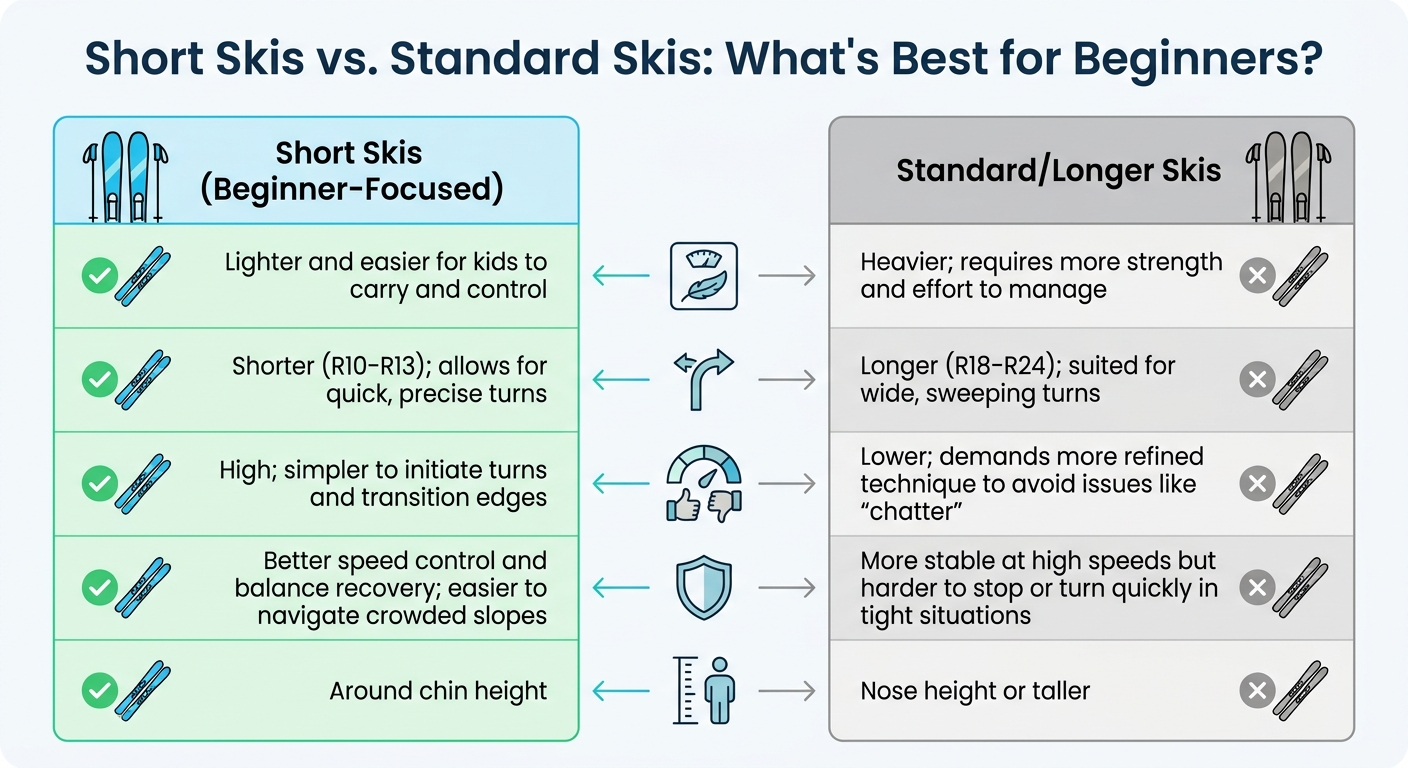
Short Skis vs Standard Skis Comparison for Kids
This table breaks down the main differences between short skis and standard skis, helping you see why short skis are often the better choice for beginners, especially kids. The features below highlight how short skis excel in balance, control, and safety.
| Feature | Short Skis (Beginner-Focused) | Standard/Longer Skis |
|---|---|---|
| Weight | Lighter and easier for kids to carry and control | Heavier; requires more strength and effort to manage |
| Turning Radius | Shorter (e.g., R10–R13); allows for quick, precise turns | Longer (e.g., R18–R24); suited for wide, sweeping turns |
| Ease of Use | High; simpler to initiate turns and transition edges | Lower; demands more refined technique to avoid issues like "chatter" |
| Safety Features | Offers better speed control and balance recovery; easier to navigate crowded slopes | More stable at high speeds but harder to stop or turn quickly in tight situations |
| Recommended Height | Around chin height | Nose height or taller |
Short skis stand out in areas like maneuverability and fatigue management. Their lighter weight and shorter turning radius (R10–R13) make them perfect for beginners, allowing for quick and controlled turns. On the other hand, standard skis, with their longer radii (R18–R24), require more advanced skills to handle effectively.
Another key advantage of short skis is how they reduce fatigue. When kids get tired, they’re less likely to lose control because shorter skis are easier to manage. This added stability helps prevent falls and creates a safer learning experience.
Conclusion
Short skis provide an excellent starting point for beginners, offering advantages like better balance, easier turning, reduced fatigue, improved safety, and quicker skill-building. They’re also easier to transport and handle a variety of snow conditions, making them a practical choice for learners. These features create a supportive environment that helps build confidence on the slopes.
When choosing skis for your child, focus on control rather than speed. As the Snowfeet Store puts it:
Shorter skis are usually easier for beginners because they are easier to control and turn.
This ease of control plays a crucial role in the learning process, ensuring smoother progress from those first shaky steps to mastering turns and carving with confidence.
Selecting the right equipment is about more than just performance - it can determine whether skiing becomes a cherished hobby or a frustrating experience. Short skis, typically ranging from 65 cm to 99 cm, simplify the learning curve, allowing kids to concentrate on technique and have fun without being overwhelmed by bulky gear.
FAQs
When should my child switch from short skis to longer skis?
When your child shows improved balance, control, and confidence on the slopes, it might be time to move them to longer skis. This often occurs between the ages of 6 and 8 or when they've physically outgrown their current pair. Longer skis can provide added stability and help them refine their skills as they progress.
Do short skis work with regular ski boots and bindings?
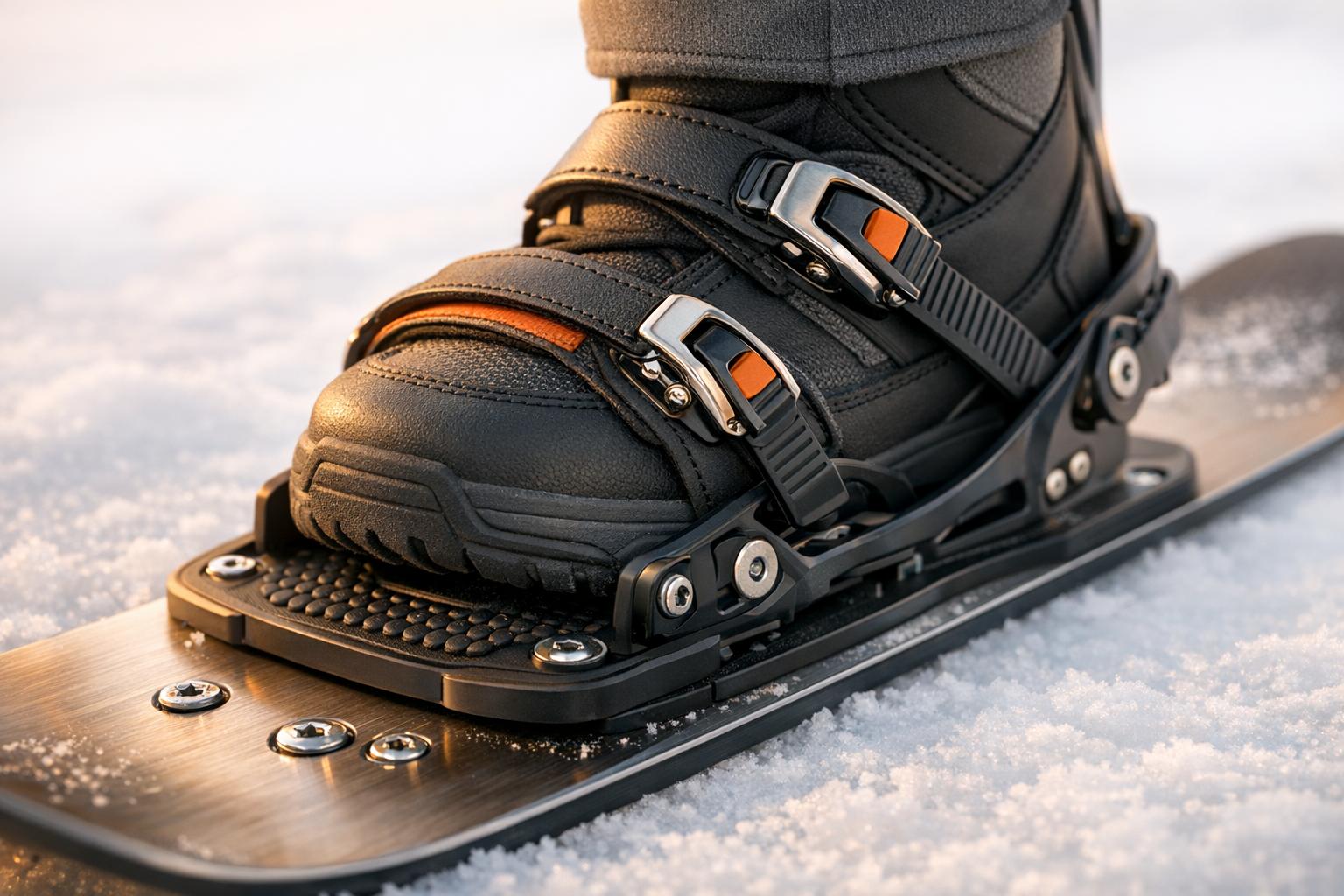
Short skis are fully compatible with standard ski boots and bindings, making them a practical option for kids who are just starting out on the slopes. Since they don’t require any specialized gear, they simplify the process for young skiers and their families. These skis are built to integrate effortlessly, providing a smooth and fun learning experience.
Are short skis good for ski school lessons and beginner areas?
Short skis are a great choice for ski school lessons and beginner areas. They offer better control, are easier to maneuver, and enhance safety for young learners. This makes them an excellent option for helping kids build confidence and develop their skills on the slopes.

Leave a comment
This site is protected by hCaptcha and the hCaptcha Privacy Policy and Terms of Service apply.