
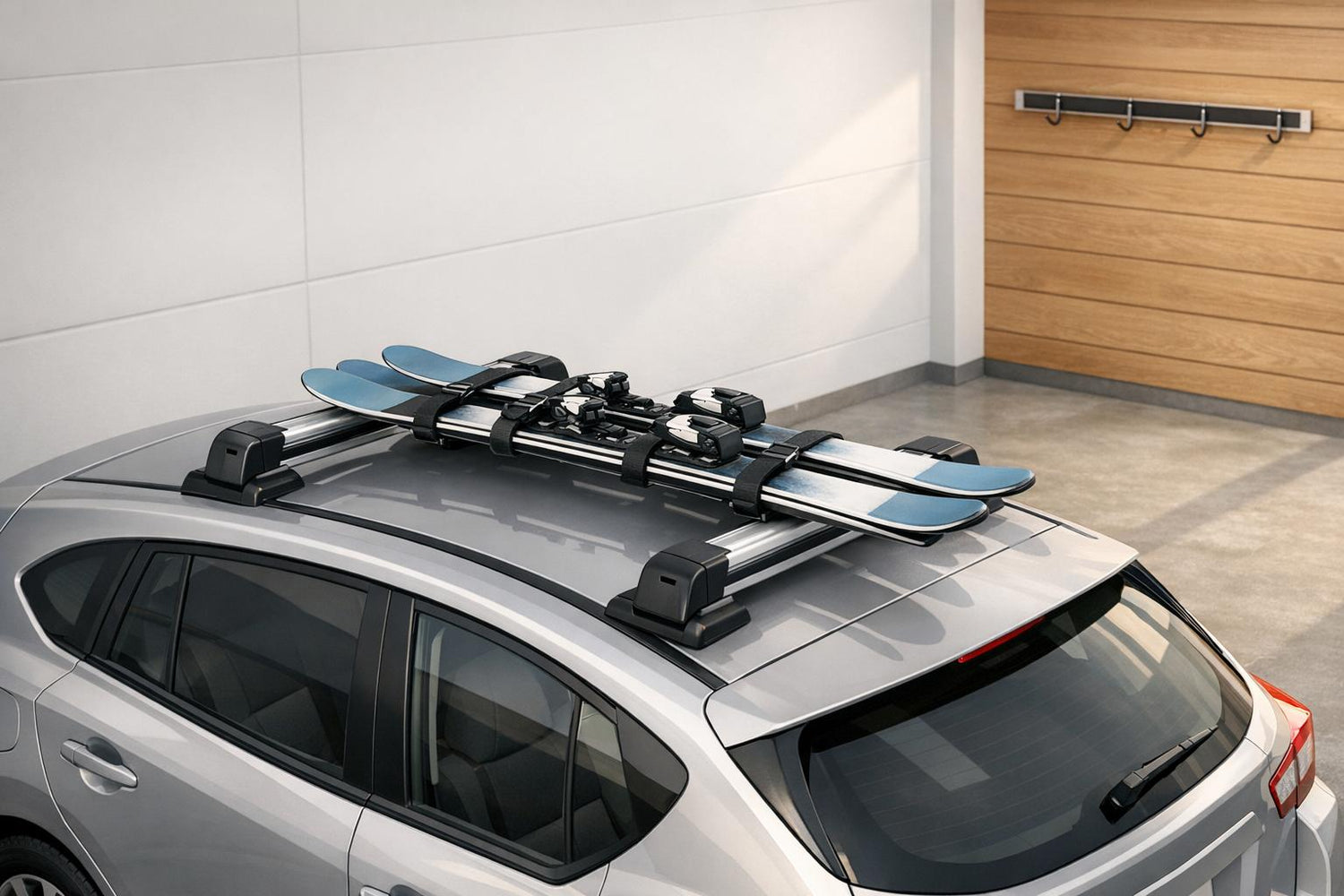
Short skis are compact, lightweight, and simple to handle, making them a great option for skiers who value convenience. Measuring 25–47 inches (65–120 cm), they fit in small cars, closets, or even carry-on luggage, and weigh just 2–5 lbs each. This guide covers how to transport and store them effectively, with practical tips for car setups, roof racks, and home storage solutions.
Key Takeaways:
- Transporting in Cars: Use internal ski racks or fold down seats for secure storage.
- Roof Racks & Carriers: Ideal for saving interior space but require weatherproofing to avoid damage.
- Home Storage: Keep skis in a cool, dry place using wall or ceiling-mounted racks to prevent warping and scratches.
- Vehicle-Specific Tips: Compact cars, SUVs, and trucks all offer unique ways to carry short skis efficiently.
Short skis are perfect for urban skiers or those with limited storage space. With the right approach, you can protect your gear and make trips to the slopes hassle-free.
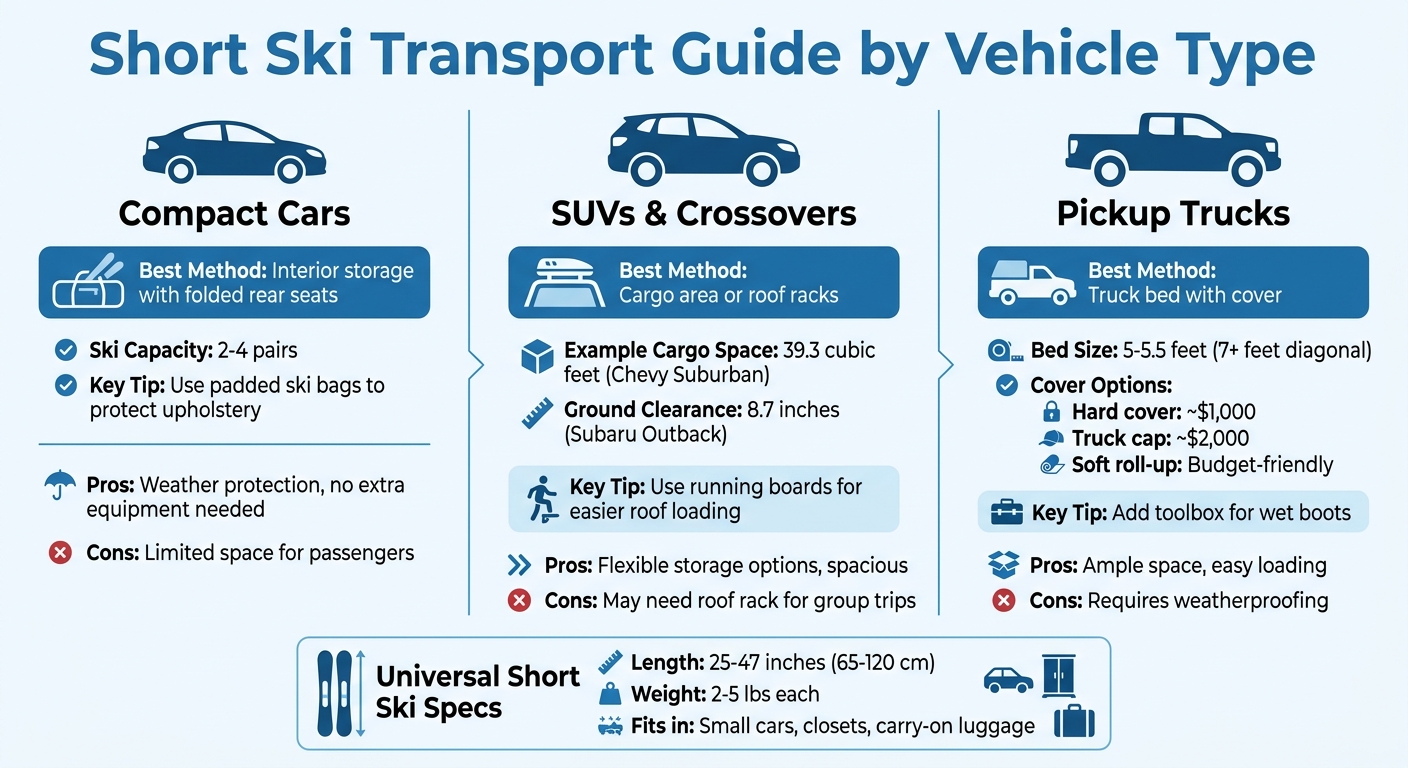
Short Ski Transport and Storage Guide by Vehicle Type
ULTIMATE Ski Storage Hack: Organize Your Garage Like a Pro in 10 Minutes!
sbb-itb-fed8676
1. Transporting Short Skis Inside Your Car
Short skis are a great choice for transporting inside your car, thanks to their compact size. Storing them indoors not only shields your gear from harsh weather but also reduces the risk of scratching your car's exterior. This method works well alongside external storage options, which we’ll touch on later.
a. Making the Most of Your Car’s Space
An internal ski rack system is an excellent way to keep your skis organized and securely stored in your vehicle’s cabin or cargo area.
b. Protecting Your Car and Keeping Skis Stable
A dependable internal ski rack ensures your skis stay in place, preventing them from sliding around. This helps protect your car’s interior from damage and keeps your gear secure, even during sudden stops or sharp turns, for a smoother and safer journey.
2. Using Roof Racks and External Carriers
When your car's interior space runs out or you're carrying multiple sets of gear, roof racks and external carriers can be a lifesaver. They free up room inside the vehicle, making long trips more comfortable. However, keep in mind that these options leave your skis exposed to weather and road debris.
a. Setting Up and Using Roof Racks
Roof racks come with adjustable clamps that fit various crossbars or direct mounts, offering a lower profile. Before buying, double-check that your setup is compatible with the standard 1x2" crossbars.
To protect your skis, secure them using soft rubber straps and bumpers. This prevents any damaging metal-on-metal contact. That said, mounting skis externally does have its downsides. Grime, salt, rocks, and moisture can all take a toll, potentially leading to rust or other damage. A good solution? Use a quick-dry microfiber sleeve. These sleeves wick away moisture while allowing airflow, ensuring your skis dry in less than 24 hours.
Here's an example: In January 2025, a customer named Beau F. shared his experience with the VelociRAX 5X rack equipped with SkiRAX attachments. While the system kept his skis secure, the drop-release mechanism became clogged with sand and grime from snowy, salty roads. This required a thorough cleaning to avoid issues like jamming in cold weather.
By following these tips, you can set up a rack system that’s both reliable and cost-effective.
b. Costs
The price of roof rack systems can range between $200 and $500, depending on the brand and features you choose. If you're considering hitch-mounted options, the SkiRAX is a solid choice at around $239. It's especially suitable for shorter skis, accommodating lengths as small as 35 inches (90 cm).
3. Storing Short Skis at Home
Properly storing your short skis after each season is essential to keep them in good condition. Protecting them from moisture, temperature changes, and physical damage helps prevent warped bases and dull edges.
a. Getting Skis Ready for Storage
Start by cleaning your skis thoroughly. Make sure they’re completely dry before storing them to avoid rust or other damage.
b. Finding the Right Storage Spot
Your garage might seem like a convenient option, but it’s important to be mindful of potential challenges like temperature swings and humidity. Choose a cool, dry spot away from direct sunlight to preserve the skis’ materials. Store them flat or at a slight angle, and avoid leaning them heavily against a wall for long periods, as this could cause warping. If you’re storing them in the garage, invest in storage equipment made from durable materials like powder-coated steel or moisture-resistant wood to handle the fluctuating conditions.
c. Storage Equipment and Organization
Once you’ve chosen the right spot, organize your skis to keep them safe and out of the way. Wall-mounted racks are a great way to save floor space while protecting your skis from moisture and accidental damage. If wall space is tight, ceiling-mounted racks are another smart option for making use of overhead storage. For renters or those who prefer not to drill into walls, freestanding racks offer a flexible, non-permanent solution.
To keep your skis secure, use wrap straps to hold pairs together and prevent the metal edges from rubbing - these typically cost about $15.95 for a 4-pack. For added protection, store your skis in a padded travel bag to shield them from dust, scratches, and potential garage clutter.
4. Transport Tips for Different Vehicle Types
Tailor your transport approach based on your vehicle type with these practical tips for compact cars, SUVs, and pickup trucks.
a. Compact Cars
Compact cars can handle short skis effectively by utilizing their interior space. Folding down the rear seats creates room to safely store skis, boots, and other gear. To protect both your skis and your car's upholstery, use a padded ski bag or secure the skis with durable straps.
b. SUVs and Crossovers
SUVs provide flexibility with their spacious interiors and external storage options. Short skis fit easily in the cargo area, especially when traveling alone or with just one passenger. For example, the Chevy Suburban offers 39.3 cubic feet of cargo space, even with seating for eight. For group trips, roof racks are a great solution. Taller SUVs may benefit from running boards or similar features to make loading easier. Additionally, models like the Subaru Outback, with 8.7 inches of ground clearance, are well-equipped for snowy parking lots.
c. Pickup Trucks
Pickup trucks simplify ski transport, as their beds often offer plenty of space. Even trucks with shorter 5 to 5.5-foot beds provide over 7 feet of diagonal storage, which is more than enough for short skis. To protect your skis from weather and theft, consider using a hard cover (around $1,000), a truck cap (approximately $2,000), or a more affordable soft roll-up cover. As one user, Gorgonzola, shared:
"I love my affordable roll-up cover... it lets me use the full bed for hauling."
Adding a toolbox is another smart option. It provides a place to store wet boots and accessories, keeping them secure and preventing them from sliding around and potentially scratching your skis.
These tips help make transporting and storing your skis easier, no matter what type of vehicle you drive.
Wrapping It All Up
Short skis make life easier when it comes to transport and storage. With their compact size - typically around 31–55 inches - they can slide right into most cars without the hassle of roof racks.
Taking care of your skis is just as important as choosing the right ones. Storing them in stable conditions (between 50–70°F) and keeping them waxed can extend their lifespan by up to 50%. On the flip side, poor storage practices are responsible for 25% of ski damage claims every year, costing the industry a hefty $12 million in repairs.
These tips also highlight how short skis can streamline your trips. Check if your car’s backseat can accommodate them with the seats folded down, or consider a wall-mounted rack - usually priced between $40 and $100 - to clear up some floor space. These small adjustments can make a big difference.
And don’t just take it from the stats - real users back this up:
"Short skis revolutionized my weekend trips - no more wrestling long boards into the Subaru." - Backcountry Magazine reader poll winner, January 2025
FAQs
What’s the best way to keep short skis from sliding around inside my car?
To keep your short skis from shifting around in your car, use a travel-friendly ski bag to stabilize and protect them. For added security, consider using straps or tie-downs to hold the skis firmly in place. Making sure the skis are snug and secure will help reduce movement and protect them from potential damage during the trip.
Do I need a sleeve or bag when carrying short skis on a roof rack?
Using a sleeve or bag for your short skis on a roof rack isn’t absolutely necessary, but it’s a smart choice. A ski bag provides extra protection against scratches, warping, and other potential damage during transport. Plus, it makes handling your skis much easier. If you want to keep your gear safer and in great condition, investing in a good-quality ski bag is well worth it.
How should I prep short skis for off-season storage to prevent rust and warping?
To keep your short skis in great condition during the off-season, start by cleaning and drying them thoroughly. This helps eliminate any moisture or dirt that could lead to rust or other damage. Once clean, apply a thin layer of wax or a rust inhibitor to shield the metal edges. Finally, store your skis in a cool, dry spot, away from direct sunlight and temperature swings, to prevent warping and other issues.

Leave a comment
This site is protected by hCaptcha and the hCaptcha Privacy Policy and Terms of Service apply.