
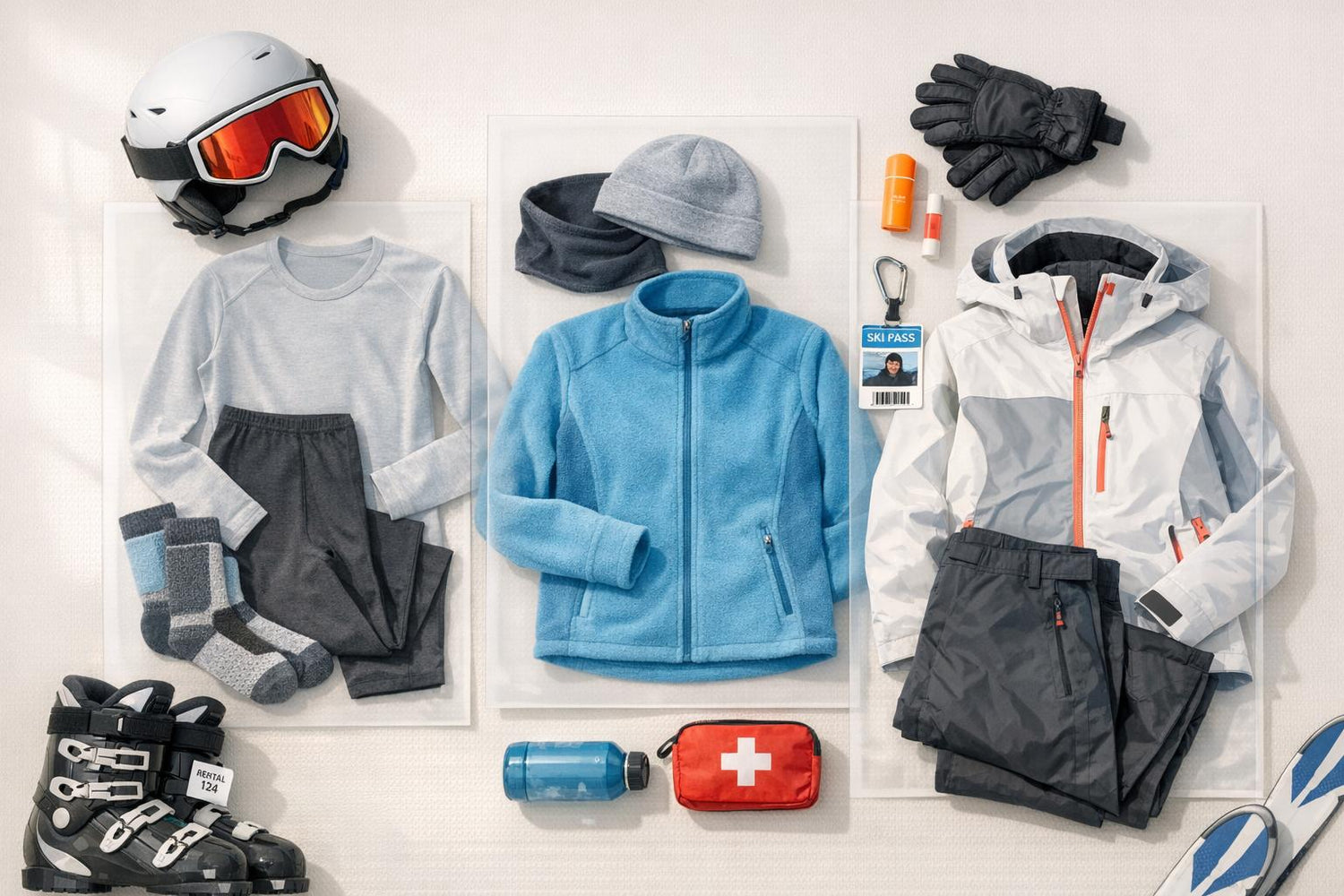
Your first ski trip can be exciting, but packing the right gear is crucial for a smooth experience. Here's a quick checklist to help you prepare:
- Gear: Rent skis, boots, and poles for affordability and flexibility. Ensure boots fit snugly but comfortably.
- Safety: Always wear a helmet to reduce head injury risks. Goggles protect against UV exposure and improve visibility.
- Clothing: Layer up with moisture-wicking base layers, insulating mid-layers, and waterproof outerwear. Avoid cotton.
- Accessories: Bring gloves, ski socks, a neck gaiter, and sunscreen to stay warm, dry, and protected.
- Extras: Pack snacks, water, and a first-aid kit. If driving, prepare for winter conditions with snow chains and ice scrapers.
Preparation makes all the difference. Rent your gear, dress in layers, and don’t skip a lesson - it’s the smartest way to build confidence on the slopes.
What You NEED to Go Skiing - A Beginners Gear Guide
sbb-itb-fed8676
Skiing Equipment You Need
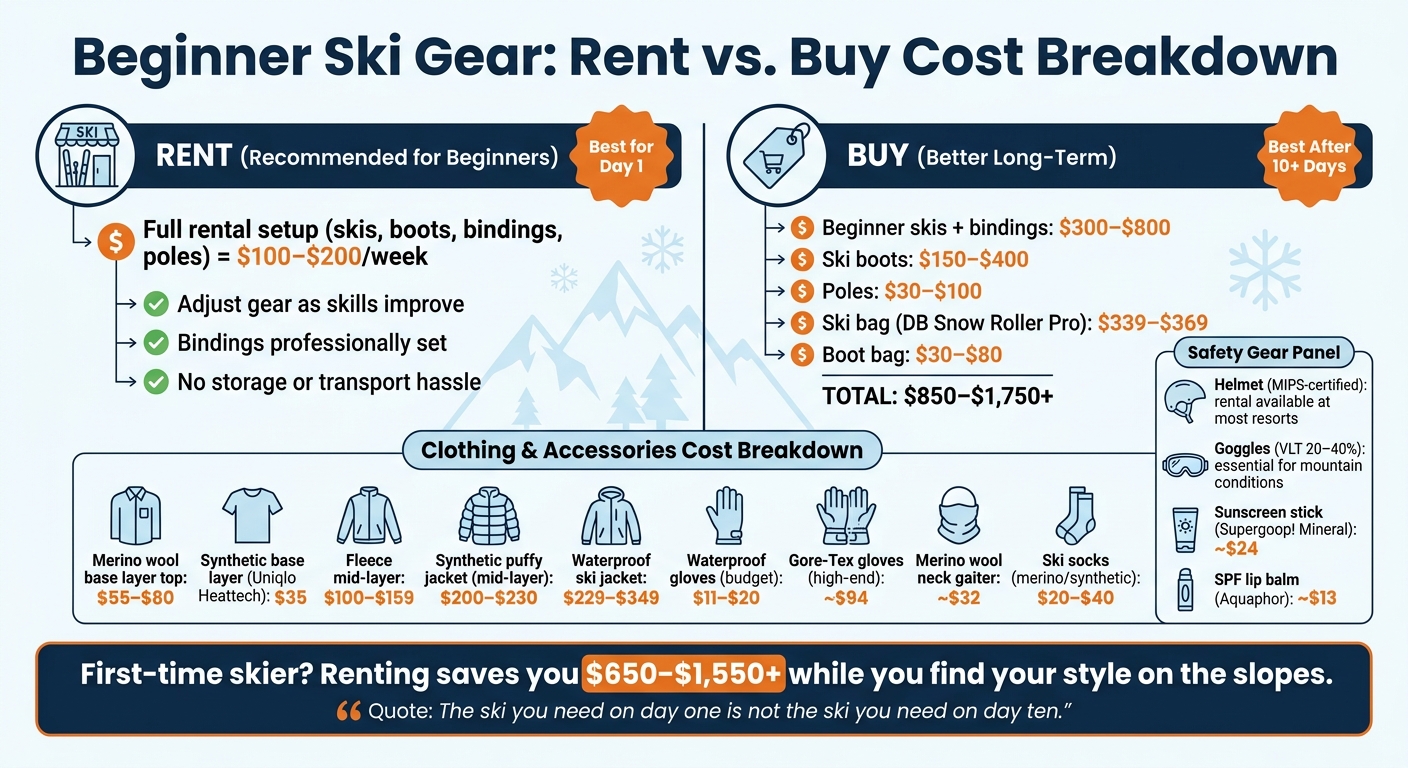
Beginner Ski Gear: Rent vs. Buy Cost Breakdown
Once you've nailed down proper attire and safety essentials, it's time to talk about the gear you'll actually use on the slopes. If it’s your first trip, there’s no need to buy everything outright. Renting is a smart choice for beginners - a full rental setup typically costs between $100 and $200 for the week, compared to the $500–$1,500 price tag of purchasing everything. As Analisa Price, Apparel Product Manager, wisely points out:
"The ski you need on day one is not the ski you need on day ten."
Renting also allows you to adjust your equipment as your skills improve, ensuring you always have gear that matches your current ability.
Skis, Boots, and Bindings
When renting skis, be sure to request beginner or "Level 1" skis. These are designed to be shorter and more flexible, making them easier to turn and control. As Sarah Baldwin from Park City Sport explains:
"Beginner skis are shorter and more flexible, helping you learn to turn and stay in control."
Many beginner skis come as integrated systems, meaning the bindings are pre-matched with the skis, which simplifies the setup process.
Boots are just as important as skis, and the fit is critical. They should feel snug - secure but not painful. A good rule of thumb is that your toes should lightly touch the front when standing straight but pull back slightly when you flex forward into a skiing stance. As Brundage Mountain Resort advises:
"Tightness is necessary for maximum control but not so much that they cut off circulation."
Women should be aware that many rental boots are designed based on male anatomy, which can lead to discomfort for those with wider or lower calves. If the standard options don’t feel right, ask the rental shop for alternatives.
Bindings are a safety must-have. They need to be professionally adjusted to your boots and body weight so they release properly in case of a fall. Rental shops typically handle this setup, but it’s always a good idea to double-check before hitting the slopes.
With the core gear covered, let’s move on to some essential accessories.
Poles and Ski Accessories
Poles can help with balance and navigating flat terrain, but some instructors suggest skipping them initially to focus on developing your leg technique. Poles are usually included in rental packages, so there’s no need to stress over this decision.
A few additional accessories can make your ski trip more convenient. A ski strap keeps your skis together while carrying them, and a ski bag protects your gear during transport to and from the resort. These items are affordable and can save you a lot of hassle during your trip.
Safety and Protective Gear
Once you've sorted out your skis, it’s time to think about safety. For beginners, falls are part of the learning curve, so having the right protective gear is a must.
Helmets
A helmet isn’t just a recommendation - it’s a necessity. The National Ski Areas Association (NSAA) highlights its importance:
"Skiers and snowboarders who wear helmets are 7 times less likely to suffer a head injury."
Look for helmets certified to ASTM F2040 or CE EN 1077 standards. For added protection, consider models with MIPS (Multi-directional Impact Protection System) technology, which helps reduce rotational forces during falls.
Fit is just as important as certification. Your helmet should fit snugly without causing discomfort and stay securely in place as you move. Kevin Hickey, President of the Hoboken Ski & Snowboard Club, emphasizes:
"A helmet should be one of your first purchases. Since many people like to try both skiing and snowboarding when they first start out, a helmet is one piece of equipment that's not specific to either sport."
To ensure proper fit, try helmets on in person instead of buying online. Head shapes vary, and what works for one person may not work for another. If purchasing a helmet isn’t an option yet, most resorts offer rentals. However, owning your own helmet allows you to monitor its condition and impact history over time.
Goggles and Sunglasses
Snow-covered slopes and high altitudes amplify UV exposure, while wind and flying debris can make visibility a challenge. That’s why goggles are essential.
For beginners, goggles with a Visible Light Transmission (VLT) range of 20–40% work well under most mountain conditions. Anti-fog ventilation is another crucial feature since fogged lenses can compromise your safety. If you wear prescription glasses, look for OTG (over-the-glasses) models for a comfortable fit.
Kevin Hickey offers a practical tip:
"If you're buying a helmet and goggles from the same brand, they'll be designed to fit together without a gap. Otherwise, try on your goggles and helmet together to make sure you don't have a forehead gap."
A proper fit between your helmet and goggles is key to keeping cold air out. Always test them together before making a purchase. If you’re just trying skiing for a single day and the weather is clear, a pair of sport sunglasses can suffice. However, goggles remain the better option for long-term use.
Once you’ve secured your safety gear, you’ll be ready to move on to choosing the right slope attire in the next section.
What to Wear on the Slopes
Getting your clothing right is just as important as having the right gear. When it comes to skiing, layering is key. The goal? Stay warm, dry, and flexible while tackling the slopes. Think of it as a three-step process: wick away sweat, keep in heat, and shield yourself from the elements.
Base Layers and Mid-Layers
Start with a moisture-wicking base layer. As Genevieve Schmitt puts it:
"The first layer on your skin should be a moisture-wicking layer of some sort."
Two standout materials for this layer are merino wool and synthetic polyester. Merino wool is warm, naturally resists odors, and feels soft against the skin, though it comes at a higher cost - expect to pay between $55 and $80 for a midweight top. On the other hand, synthetic options like Uniqlo Heattech are more budget-friendly, starting at $35, and dry quickly. However, they tend to hold onto odors over time. Avoid cotton at all costs - it traps moisture, stays wet, and will leave you shivering.
Next up is the mid-layer, which provides insulation. Fleece jackets, priced around $100–$159, or lightweight synthetic puffy jackets, costing $200–$230, are excellent choices. Skip down-filled options since they lose their insulating power when damp or compressed.
Once you've got your base and mid-layers sorted, it's time to focus on outerwear.
Outerwear and Accessories
Your jacket and pants serve as your armor against wind, snow, and moisture. Entry-level waterproof jackets start at $229, while high-end models can cost up to $349. If you're on a budget, check out secondhand options from reputable resale sites.
For gloves or mittens, the choice depends on your needs. Mittens are warmer because your fingers share heat, but gloves give you better dexterity for tasks like adjusting poles or buckles. Budget-friendly waterproof gloves start at $11–$20, while high-performance Gore-Tex gloves are around $94.
Don't forget neck protection. Analisa Price, an Apparel Product Manager, highlights its importance:
"All our veins and arteries are very close to the surface of the skin on our necks. So it's an easy place to feel like you're losing heat."
A merino wool neck gaiter (around $32) or a balaclava is a lightweight way to seal this vulnerable area.
Ski Socks and Foot Warmers
Ski socks might seem like a minor detail, but they play a big role in your performance. Contrary to popular belief, thicker socks aren't better. Analisa Price explains:
"Everybody thinks because it's cold they need the burliest, warmest, thickest sock. But your feet are what's steering the plane, so you want that good connection between your foot and the boot board."
Stick to one pair of thin-to-medium, over-the-calf socks made from merino wool or a synthetic blend. They'll give you the right balance of warmth and control. For extra heat, toss in some chemical hand warmers - your toes will thank you.
Personal Care Items to Pack
High altitudes can be tough on your skin, thanks to stronger UV rays and drier air. Packing a few key items can help keep you protected and comfortable.
Sunscreen and Lip Balm
Protecting your skin from the sun is non-negotiable - even in cold weather. Snow reflects sunlight, amplifying UV exposure, which can lead to sunburn faster than you might expect. As the Aspen Snowmass guide puts it:
"Because of Colorado's high elevation (and frequent sunshine), sunscreen is an absolute essential. Sunburns happen much quicker in our thinner atmosphere, so make sure you have it on hand."
A sunscreen stick is a smart, portable option for quick reapplication. For example, the Supergoop! 100% Mineral Sunscreen Stick, priced around $24, fits easily in a pocket or ski jacket. Don't forget your lips - opt for a lip balm with SPF to avoid painful, cracked lips. Aquaphor Healing Ointment, typically about $13, offers great protection and hydration.
Once your skin is taken care of, focus on staying hydrated and energized.
Hydration and Snacks
The physical demands of skiing, combined with the dry mountain air, can dehydrate you quickly. A refillable insulated water bottle, like the Owala FreeSip Bottle, is a great choice for keeping your water from freezing in cold conditions.
When it comes to snacks, think practical and portable. Romell Ward, Executive Director and Founder of BIPOC Mountain Collective, offers this tip:
"You'll get tired and hungry, and if you're eight miles from the lodge or you don't want to leave this awesome powder, chew on that [protein bar] a little bit and you'll be good."
Good options include beef jerky, protein bars, nuts, and even gummy candy. Stock up before you hit the slopes - resort prices tend to be steep.
Packing and Travel Tips
Getting your gear from home to the mountain takes a little planning. The right bags and a few clever strategies can make the process smoother.
How to Pack Your Gear
A dedicated boot bag is a must-have. It keeps your wet, muddy boots away from your clean clothes. If you're flying, pick one that fits in the overhead compartment for convenience.
For skis, a padded ski bag adds an extra layer of protection. The DB Snow Roller Pro (127L), priced at $339–$369, is a solid option. Its roll-top design adjusts to the exact length of your skis, keeping them snug and secure during travel. Ian Levine, a Wax Technician for the U.S. Snowboard Cross Team, swears by packing cubes for staying organized:
"I really like packing cubes for ski trip packing... I put all of my base layers and my ski socks and stuff in a packing cube. And then that way it can all just kind of go back in there once you're done and it's dirty."
Another handy tip? Use a dry bag for wet gloves and socks. This keeps moisture from spreading to the rest of your gear.
Once your gear's packed, it's time to think about getting to the slopes safely.
Driving in Winter Conditions
If you're driving, check your state's rules for snow chains or winter tires - requirements can vary depending on where you're headed.
A word of caution from U.S. News Travel:
"Incorrectly used chains could end up voiding your car's warranty."
Make sure your car is winter-ready by packing essentials like a snow brush, ice scraper, and extra windshield washer fluid. It's also smart to carry a small first-aid kit, such as the Coleman All Purpose Mini First Aid Kit (around $10), and an Anker power bank to keep your phone charged - cold weather can drain batteries quickly. And since cell service in mountain areas can be unreliable, download your maps and directions ahead of time.
With these tips, you'll be well-prepared to handle your gear and navigate winter roads, setting the stage for a fun and safe ski trip.
Conclusion: You Are Ready to Ski
Your checklist is complete: from the right skiing gear and clothing layers to the must-have accessories. As FERA aptly says:
"Your first ski trip does not require more clothing. It requires the right clothing."
Before heading out, confirm your rental reservations and pack wisely. Stick to moisture-wicking layers (ditch the cotton!) and make sure your helmet and goggles fit just right. Tuck essentials like sunscreen, lip balm, and a protein bar into your jacket pockets, and keep your lift ticket safe in an interior zippered pocket for easy access.
But gear alone isn't enough - building your skills is just as important. Be sure to book a lesson. It’s a smart investment that sharpens your technique and makes your first trip safer and more enjoyable. As skier Jack Weissman emphasizes:
"The one thing you should absolutely buy is a lesson."
Pack everything the night before, double-check your gear, and hit the slopes ready for an unforgettable experience.
FAQs
What size skis and boots should I rent as a beginner?
When you're just starting out, choosing the right skis is all about matching them to your height, weight, and skill level. A good rule of thumb is to pick skis that reach somewhere between your chin and the top of your head - this makes them easier to handle. As for boots, they should feel snug but not overly tight. Pair them with insulated ski socks for extra comfort and warmth. If you're unsure, the rental staff is there to help. They can recommend the ideal gear based on your measurements and experience level.
Do I need goggles if I already have sunglasses?
Goggles are a great choice for the slopes because they provide superior UV protection and are specifically designed to minimize fogging - something sunglasses often struggle with. They also offer a snug, secure fit that shields your eyes from wind, snow, and debris, giving you clearer visibility and greater comfort while skiing or snowboarding.
How many layers should I wear for different temperatures?
When it comes to dressing for different temperatures, the number of layers you wear makes all the difference. If it's really cold (below 20°F), go for three layers: start with a moisture-wicking base layer, add an insulating mid-layer, and finish with a windproof outer shell. For temperatures between 20°F and 32°F, two layers - like a base and a mid-layer - often do the trick. Once it’s above freezing, one or two lighter layers should keep you comfortable. Of course, your activity level and personal comfort matter too, so adjust as needed to stay warm and dry.

Leave a comment
This site is protected by hCaptcha and the hCaptcha Privacy Policy and Terms of Service apply.