
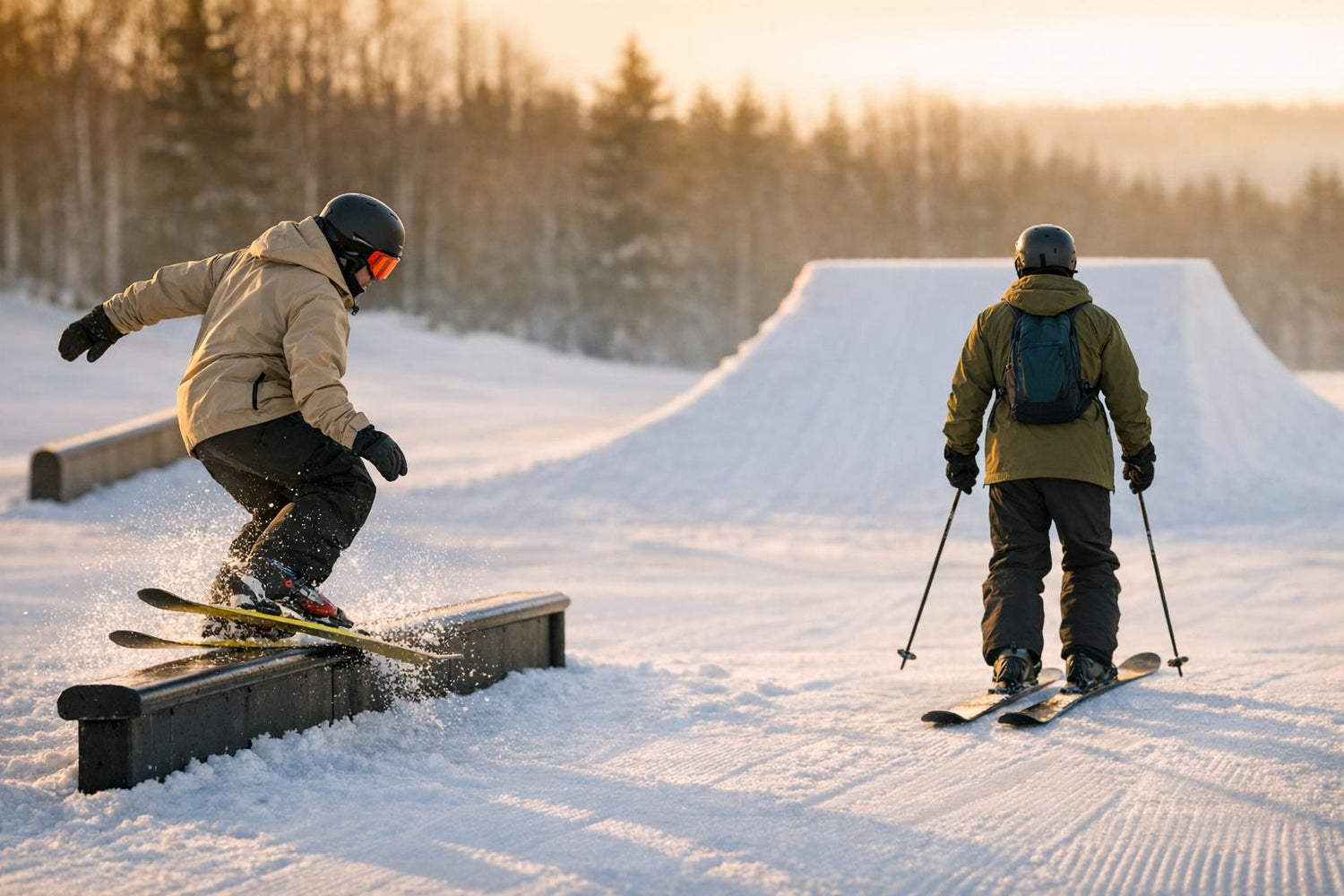
When choosing skis for snow parks, the length of your skis has a direct impact on your performance. Here’s a quick breakdown:
- Short Skis (under 160 cm): Lightweight and agile, they make spins, tricks, and quick turns easier. Best for beginners, technical rail riding, and freestyle tricks. However, they lack stability at high speeds and on large jumps.
- Long Skis (over 170 cm): Provide stability, control, and better support for high-speed jumps and icy landings. Ideal for advanced riders but harder to maneuver and more demanding for spins or tight features.
Quick Comparison
| Feature | Short Skis (under 160 cm) | Long Skis (over 170 cm) |
|---|---|---|
| Best For | Beginners, tricks, rails | Advanced riders, big jumps, speed |
| Maneuverability | High | Moderate |
| Stability at Speed | Low | High |
| Landing Support | Less | More |
| Swing Weight | Light | Heavy |
Pick short skis for playful, freestyle riding or long skis for speed and stability on big features. Match your choice to your skill level and park goals for the best experience.
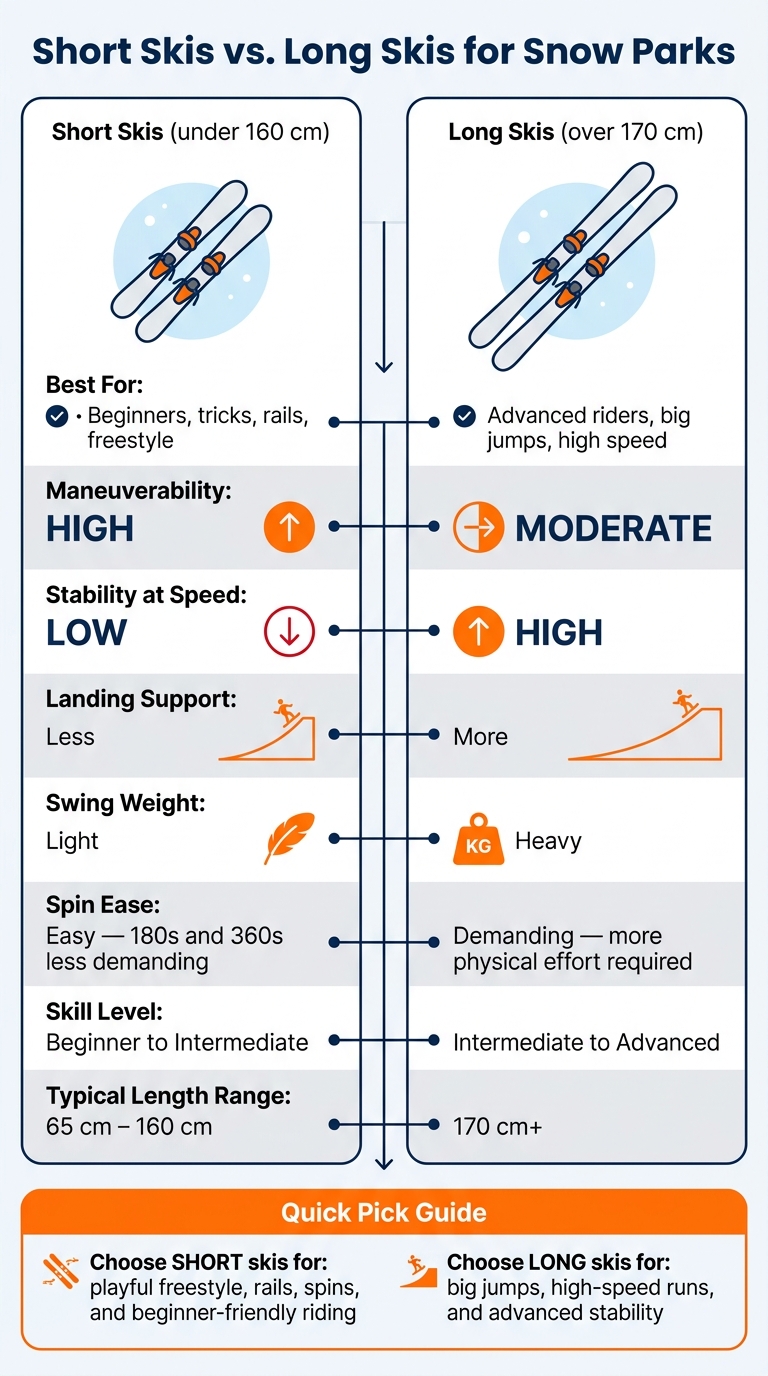
Short Skis vs. Long Skis for Snow Parks: Side-by-Side Comparison
Short Skis for Snow Parks
What Short Skis Look Like
Short skis, often referred to as skiblades, snowblades, or skiboards, typically measure between 65 cm and 120 cm. These skis are known for their lightweight construction, slim design, and highly responsive performance. Brands like Snowfeet Skiblades offer models compatible with both ski and snowboard boots. They use either a wood core for added durability or a fiberglass core for more flexibility and playfulness. This thoughtful design is what gives short skis their signature agility, making them perfect for snow park activities.
Benefits of Short Skis in Parks
Short skis shine when it comes to maneuverability. Their design allows for quick turn initiation and smooth edge-to-edge transitions, which are key for executing spins and aerial tricks. The reduced swing weight makes spins like 180s and 360s easier and less physically demanding. Additionally, their forgiving nature and responsive handling make them an excellent choice for beginners learning smaller park features.
"Short skis are super fun for riding backwards, spinning, jumping and all kinds of tricks on the slopes and in snow parks." - Snowfeet
Snowfeet offers several models to suit different preferences:
- 65 cm model ($550.00): Provides a skate-like feel, ideal for quick tricks.
- 99 cm model ($690.00): Offers more edge contact for carving while staying playful.
- 120 cm model ($950.00): Strikes the perfect balance between carving ability and park versatility.
Each model has earned a 5.0/5 rating, with users like Brad Tolin praising them: "These ski blades are a blast to use. Super easy to control, quick to turn, and way more forgiving than traditional skis."
Drawbacks of Short Skis
While short skis offer plenty of advantages, they do have some limitations. Stability at higher speeds is a common drawback - short skis can feel less secure and may chatter compared to longer skis. Their smaller surface area also provides less support during landings, particularly on larger jumps where a bigger base is beneficial. As Brad Tolin points out, "Only trade-off is at higher speeds, where longer skis still feel more stable."
Carving on more advanced features can also be tricky. Short skis require sharper technique and precise pressure control to maintain clean edges. For riders focusing on larger park features or desiring more stability at speed, models in the 99 cm to 120 cm range offer a better compromise between agility and landing support.
sbb-itb-fed8676
Long Skis for Snow Parks
What Long Skis Look Like
When it comes to park riding, long skis are all about stability. These skis are typically over 170 cm in length, with experienced riders often picking skis that reach anywhere from their nose to slightly above their head. Park-specific long skis are designed with a twin-tip shape, meaning both ends are upturned, allowing skiers to take off and land backward (or "switch") without snagging an edge. They usually feature a wood core, which provides flexibility and durability, and many modern models include rocker profiles to make transitions smoother, even with their extended length. These design elements work together to deliver a performance edge, especially for advanced park riders.
Benefits of Long Skis in Parks
One of the standout advantages of long skis is their stability, particularly at high speeds. When you're charging toward large jumps, the extra length and surface area help reduce vibrations, keeping your ride steady and controlled.
"The increased effective edge and mass of a longer ski provide a much larger platform on the snow. This dampens vibrations and translates to incredible stability and confidence when you're flying down the mountain." - Steve J. Strandberg, Ski Instructor
The larger platform also makes landing easier, offering a bigger "sweet spot" to absorb impact. Plus, the extended effective edge gives advanced skiers better grip and control when carving aggressively into icy or hardpacked features.
Drawbacks of Long Skis
That said, the stability of long skis comes with some compromises. One major downside is the increased swing weight. Longer skis are heavier, making spins in the air more physically demanding. What feels effortless on shorter skis can become a serious workout on skis over 170 cm. Additionally, the slower edge-to-edge transitions can throw off timing when navigating tight features.
"The increased length and mass require more effort and time to transition from one edge to the other. This makes them feel sluggish and cumbersome in tight spots." - Steve J. Strandberg, Ski Instructor
Another challenge with long skis is their unforgiving nature. As Lucy Higgins explains: "Because longer skis typically weigh more and create longer turns, they can tire legs quicker than shorter options." If your form slips - like shifting into a "backseat" stance - long skis can become unstable, chattering and harder to control. They demand precision and confidence, rewarding skilled riders but punishing those who hesitate.
Choosing the Right Skis for Park Riding
Key Factors to Think About
When it comes to picking skis for park riding, your experience, riding style, and speed preferences all play a role.
First, consider your skill level. Beginners and intermediate skiers often benefit from shorter skis since they’re easier to control and more forgiving if things don’t go as planned. On the other hand, advanced riders tackling big jumps typically prefer longer skis for the added stability they provide. Your body type also plays a part - taller and heavier skiers usually need longer skis for support, while lighter skiers can handle shorter options with ease.
The type of park features you focus on is another factor. Skiers who spend more time on rails and jibs will appreciate the agility of shorter skis, while those hitting large jumps need the steady edge hold and control that longer skis offer. If you like to mix it up between rails and jumps, your personal preference will guide the choice.
Additionally, think about your binding mount position. Park skiers often go for a center-mount setup, which balances the ski but may require sizing up slightly for a better effective edge. Similarly, skis with rocker in the tip and tail have a shorter effective edge, meaning you can go longer without feeling like the skis are unwieldy.
These considerations will help you decide whether shorter or longer skis are a better match for your park riding style.
When Short Skis Are the Right Pick
Short skis shine in playful, freestyle-focused park riding. Their quick and nimble design makes them perfect for tackling rails and other technical features. The fast edge-to-edge response makes them intuitive and easy to control, especially for skiers who are newer to park terrain.
Take, for example, the Snowfeet Skiblades 99 cm, priced at $690.00. These skis have received glowing reviews, earning a 5.0/5 star rating from users who praise their ease of control and forgiving nature. Their compact size also makes them convenient to carry around between runs - something you’ll appreciate after hauling full-length skis all day.
Short skis also deliver a skate-like, freestyle vibe that’s ideal for spontaneous riding. Whether you’re spinning on flat ground, hopping on features, or just having fun, their playful nature is tough to beat. This makes them a great choice for riders who prioritize creativity and low-commitment tricks.
When Long Skis Are the Right Pick
If your park sessions are all about big jumps, high speeds, or carving into icy landings, longer skis are the way to go. Their added length and surface area provide stability at speed, while the extended effective edge ensures a solid grip when precision is key.
As The Ski Monster puts it:
"Longer skis reward strong technique and forward pressure. But if balance or stamina fade, they can be harder to manage than a slightly shorter ski."
This means that while longer skis offer excellent performance for advanced riders, they require consistent technique and energy to handle effectively.
Here’s a quick guide to match your rider profile with the best ski length:
| Rider Profile | Best Fit |
|---|---|
| Beginner or intermediate | Short skis (under 100 cm) |
| Technical rail/jib focus | Short skis |
| Balanced jump + rail riding | Mid-length (chin to nose height) |
| Advanced riders on big jumps and high speeds | Long skis (nose height or longer) |
Choosing the right skis isn’t just about specs - it’s about finding the gear that complements your style and helps you enjoy every run.
Conclusion
Key Takeaways
The choice between short and long skis ultimately depends on how you ride in the park. Short skis are lighter, easier to spin, and more manageable on rails and technical features. This makes them a great fit for beginners, intermediate riders, or anyone diving into freestyle tricks. On the other hand, long skis provide better stability at high speeds and a stronger edge grip, which is ideal for advanced riders tackling big jumps or rougher terrain.
As highlighted earlier:
"Short skis are super fun for riding backwards, spinning, jumping and all kinds of tricks on the slopes and in snow parks."
That playful nature of short skis does come with a trade-off - they’re less stable at higher speeds. Meanwhile, long skis may feel less agile in tight spots but shine when control and stability are key. These differences are essential to consider when deciding which ski length suits your riding style.
Final Thoughts
Your decision should reflect your park ambitions, not just the look of the skis. If your focus is on mastering rails, spins, or achieving that skate-like vibe, something compact like the Snowfeet Skiblades 99 cm ($690.00) offers a responsive and forgiving ride without skimping on quality. For those aiming to conquer high-speed jumps or need extra stability, a longer ski could be the better option.
The park experience is all about having the right gear for your goals. Pick the ski length that complements your style, and you’ll make the most of every run.
Short vs. Long Skis for Park Riding: The Guide to Finding Your Perfect Length! 🏂🤔 | Skiing Tips 2023
FAQs
What ski length should I choose for my height and weight?
To find the right ski length, you’ll want to factor in your height, weight, and skill level. For most intermediate to advanced skiers, skis that reach somewhere between your nose and eyes are a solid choice. However, if you’re taller or heavier, you might need longer skis to improve stability and control. On the other hand, if you’re a beginner, skis closer to chin height are a better option. Shorter skis are easier to turn and handle, making them perfect for those still building confidence on the slopes.
Can I safely use short skis on big jumps?
Short skis are easier to handle and offer better control at lower speeds, which makes them a solid choice for navigating park features. That said, they might not provide the stability required for tackling large jumps, especially when compared to longer skis. To stay safe, it’s important to match your equipment to your skill level and comfort, and always stick to the park rules. While Snowfeet Skiblades' short skis are adaptable for various uses, make sure they offer the support and stability you need for bigger jumps.
How does a center-mount binding affect ski length choice?
Center-mount bindings adjust the ski's balance point, favoring shorter skis to improve maneuverability and control. This setup is particularly popular for park and freestyle skiing. By placing the bindings in the center, skiers often opt for ski lengths comparable to all-mountain skis but slightly shorter. This choice enhances agility and makes performing tricks easier. The central mounting also reduces the effective edge length, which allows for quicker, more responsive turns. On the other hand, traditional mounting positions are better suited for longer skis, offering increased stability at higher speeds.

Leave a comment
This site is protected by hCaptcha and the hCaptcha Privacy Policy and Terms of Service apply.